

Background
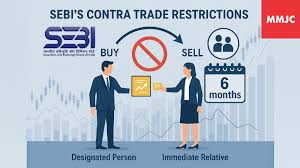
SEBI has increasingly emphasized strict enforcement of the Prohibition of Insider Trading (PIT) Regulations, especially concerning “contra trade” provisions. In a recent informal guidance sought by Century Plyboards (India) Limited [‘Century’], opinion was sought from SEBI on the application of contra trade restrictions when both a designated person and their immediate relative carried out reverse trades in a short span of six months?
As per the facts presented to SEBI, promoter and a designated person of Century, Mr. Sajjan Bhajanka, had acquired shares of the company on November 21, 2024. Shortly afterwards, Mr. Sajjan Bhajanka intended to gift shares on December 10, 2024, to his daughter (an immediate relative and member of the promoter group), via an off-market transfer. Further, the other daughter of Mr Sajjan Bhajanka intended to sell shares in the open market on December 20, 2024.
Opinion was sought from SEBI as to whether these transactions undertaken within a span of six months by Promoter and his immediate relatives would attract contra trade restrictions as per SEBI (PIT) Regulations?
Whether buy and sell of shares by immediate relatives and members forming part of promoter group would attract contra trade provisions?
SEBI opined that contra trade restrictions apply not just to the designated person but also to their immediate relatives collectively. Clause 3 read with clause 10 of Schedule B of PIT Regulations states that the designated persons and their immediate relatives are governed by an internal code of conduct inter alia specifying the contra trade restrictions for a period not less than six months. Further SEBI FAQs on SEBI (PIT) Regulations clarified that the contra trade restrictions are applicable to designated person and their immediate relatives collectively. SEBI emphasized that if any such opposite transactions (buy followed by sell, or vice versa) are executed by a designated person or their immediate relatives within six months, they fall under contra trade prohibitions[1]. If the company’s internal compliance officer is empowered, they may relax these restrictions in special cases, provided it does not violate the spirit of the regulations.
Determination of contra trade PAN wise or an entity wise?
SEBI has opined on applicability of contra trade provisions to designated persons prior to this in two informal guidance viz. Arvind Ltd and Raghav Commercial Ltd.
- SEBI’s view on applicability of contra trade provisions in case of Arvind Ltd: In this case (facts of the case) Arvind Limited, a listed company on BSE and NSE, sought informal guidance from SEBI regarding the application of contra-trade restrictions under Clause 10 of Schedule B of the SEBI (Prohibition of Insider Trading) Regulations, 2015 (PIT Regulations). One of its promoters, Mr. P, holds shares of Arvind Ltd. under his PAN in multiple capacities: as an individual, as a trustee for his family, as a trustee for other beneficiaries, and as executor of various wills.
Question posed to SEBI was, “whether Mr. P would be considered a designated person for all such capacities and if contra-trade restrictions would apply collectively or individually across these holdings. Additionally, Arvind Ltd. asked if these restrictions would extend to shares held by co-trustees under a different PAN.”
SEBI opined that contra trade restrictions shall apply to all shares held by a designated person under the same PAN, irrespective of the different capacities (such as individual, trustee, or executor) in which those shares are held. This means that if a designated person sells shares held in one capacity under their PAN, they would be restricted from buying shares in another capacity under the same PAN. By logical extension, however, shares held under different PANs, such as those held by co-trustees or other persons acting in different capacities, would not collectively trigger contra trade restrictions. Each PAN is treated as a separate entity for applying contra trade provisions, so trading activities under different PANs should be considered independently. This interpretation aligns with SEBI’s distinction that contra trade restrictions are PAN-based and do not aggregate shares across different PANs, even if held for related parties or under different capacities.
- SEBI’s view on applicability of contra trade provisions in case of Raghav Commercial Ltd:
In this case R. S. Software (India) Ltd. established the ‘R S Software Employee Welfare Trust’ in September 2012 to provide employee benefits such as medical facilities, scholarships, housing, and performance rewards. The Trust acquired 11,48,640 equity shares, representing 4.47% of the company’s total shareholding, between October 2012 and January 2013. Under regulation 3(12) of the SEBI (Share Based Employee Benefit) Regulations, 2014, the Trust was required to sell its share inventory on recognized stock exchanges by October 2019, within five years of the regulation’s notification. Promoters, the promoter group, executive directors, and independent directors of the company expressed interest in acquiring these shares from the Employee Trust via a stock market transaction. At the time, the promoters and directors held the following equity stakes: Rajnit Rai Jain (39.04%), Sarita Jain (1.43%), Rajasekhar Ramaraj (0.27%), and Richard Launder (0.19%).SEBI-IG-letter.pdf_p.pdf.pdf
Question posed to SEBI was “Whether the provision of contra-trade applies to trades made by an individual Promoter or whether the entire Promoter & Promoter Group is considered for the same. For example, if a single Promoter has executed a trade (RSWM Limited in this case), then whether the restrictions on contra trade apply to it separately or will it apply to the entire Promoter & Promoter Group.?”
To which SEBI Replied, “Consequent to the provisions of Regulation 9 of the PIT Regulations and Clause 3 of Schedule B to the PIT Regulations, the contra trade restrictions apply to trades made by promoters individually and not to the entire promoter group.” This means the contra trade provisions are considered on an individual promoter basis.
- SEB’s view on applicability of contra trade provisions in case of Deccan Gold Mines Ltd:
In this case Rama Mines (Mauritius) Ltd. (RMML) and Australian Indian Resources Ltd. (AIRL) are identified promoters of Deccan Gold Mines Ltd. (DGML), a company incorporated under the Companies Act, 1956, with shares listed on BSE. Yandal Investments Pty. Ltd. (YIPL) holds 48.98% of RMML and 22.45% of AIRL, while Halcyon Investments Ltd. (HIL) holds 24.75% of RMML and 30.88% of AIRL. AIRL was allotted shares of DGML on March 2, 2023, which are subject to a lock-in period of 18 months. RMML intends to sell DGML shares on the stock exchange. Both RMML and AIRL are corporate entities that share common promoter shareholders (HIL and YIPL), which have majority holdings in both entities, indicating their control by the same corporate promoters. The scenario was presented to SEBI for informal guidance regarding application of trading restrictions under the SEBI (Prohibition of Insider Trading) Regulations, 2015.
Question posed to SEBI was, “If two subsidiary companies (both part of the same promoter group and ultimately controlled by the same parent entity) undertook trades in opposite directions within six months, would that be a contra trade?” SEBI answered that, “since both subsidiary companies are ultimately controlled by the same parent entity, provision of contra trade restrictions shall apply to RMML and AIRL jointly i.e., if AIRL has purchased the shares… then restriction on contra trades shall apply to AIRL as well as RMML.” In simpler terms, the combined actions of entities or persons under a common control are treated together for the purpose of applying contra trade restrictions.
SEBI’s view on contra trade restrictions has seen a gradual shift from being PAN based restriction to being restriction based on PAN of immediate relatives.
Practical Impact and Challenges in implementing contra trade restrictions for immediate relatives and designated person.
The broader implications of this stand are significant:
- Cross-PAN Monitoring: For every trade executed by a designated person, companies must now diligently monitor trades by immediate relatives as well, even if under different PANs.
- Wider Responsibility: If a contra trade is triggered by an immediate relative’s action, the designated person may still be held liable under the code of conduct.
- Confusion in Disgorgement/Penalty: When a violation occurs due to an immediate relative, questions arise: Who pays the penalty or disgorges profits, the designated person, the relative, or both?
Conclusion
SEBI’s recent informal guidance, supported by specific FAQs, has removed ambiguity regarding contra trades. Now, any opposite trades (buy/sell or sell/buy) by a designated person and their immediate relatives within six months, whether through direct purchase, sales, or even gifts, are regarded as contra and could lead to regulatory action or penalties. To sum up, both professionals in governance and designated persons, including their family members, must be alert: every trade you or your immediate relatives make in the company’s shares may be under scrutiny for contra trade restrictions, regardless of whether the transactions are under different accounts or made independently. Corporate compliance officers are advised to educate employees and families about these rules and enhance surveillance to ensure collective compliance and avoid penalties
[1] Clause 10 of Schedule B under Regulation 9 of PIT Regulations: “The code of conduct shall specify the period, which in any event shall not be less than six months, within which a designated person who is permitted to trade shall not execute a contra trade…”
SEBI’s Comprehensive FAQs (Page 19-21, Section H, “Contra-trade”):
“Any buy/sell trade, undertaken by a Designated Person (DP) and their immediate relatives, within 6 months of an earlier sell/buy trade, respectively, where both the trades have been done in open market, will be tantamount to contra trade.”
The FAQ further explains: “Clause 3 of Schedule B and Schedule C specifies designated persons and immediate relatives of designated persons in the organisation shall be governed by an internal code of conduct governing dealing in securities. Hence, contra-trade restrictions (as mentioned in code of conduct) would be applicable to designated person and their immediate relatives collectively.”